Would more surveillance make Montreal safer? These mayoral candidates say yes

While housing and public transit might be dominating Montreal’s municipal election campaign, candidates are striving to pitch themselves as the best-equipped leader to make the city safer.
In an attempt to appease concerns about public safety, most of the five main Montreal parties have promised to increase police surveillance in the city.
So far, the surveillance-focused proposals lack much needed details.
But the tactics and the parties’ inclination for them may risk opening the door to the normalization of mass surveillance in Montreal.
Ensemble Montréal Leader Soraya Martinez Ferrada, Action Montréal Leader Gilbert Thibodeau and Futur Montréal Leader Jean-François Kacou support increasing police patrols in neighbourhoods or public transit as well as the installation of more security cameras to deter crime.
In particular, Martinez Ferrada is championing the creation of a “voluntary” security camera registry that would allow officers to map out the locations of residents’ home closed-circuit television (CCTV) cameras.
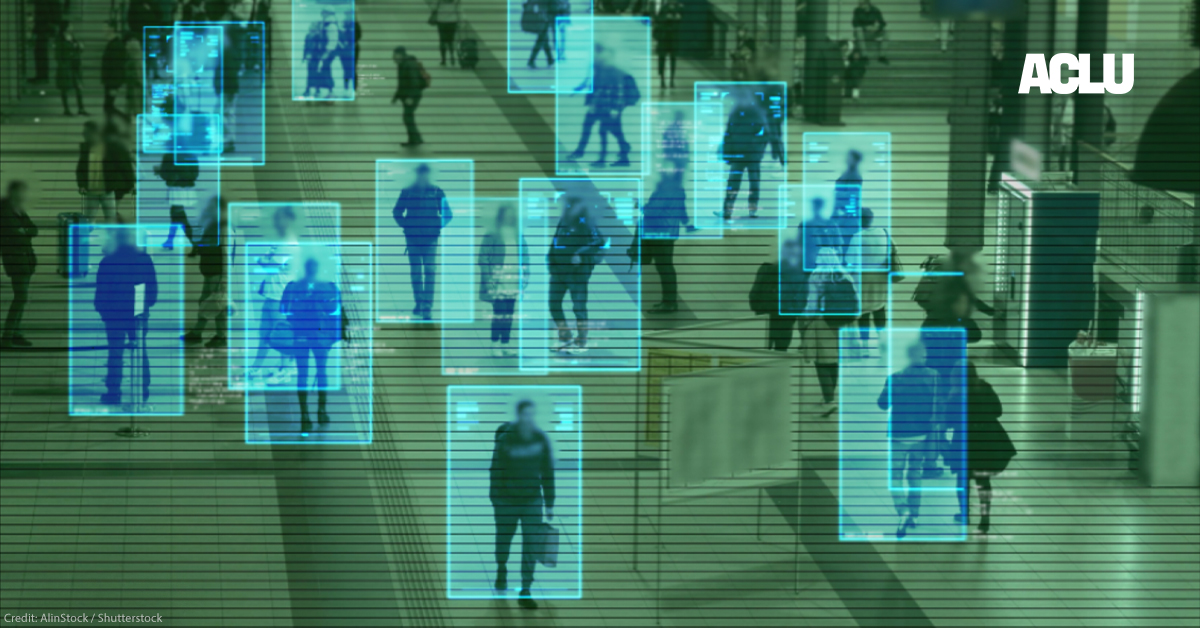
Moreover, Thibodeau is promoting the use of smart surveillance cameras — tools which might be capable of collecting biometric data — in public spaces.
Here’s why some initiatives aimed at improving public security with cameras are raising concerns.
Why register your camera with the police?
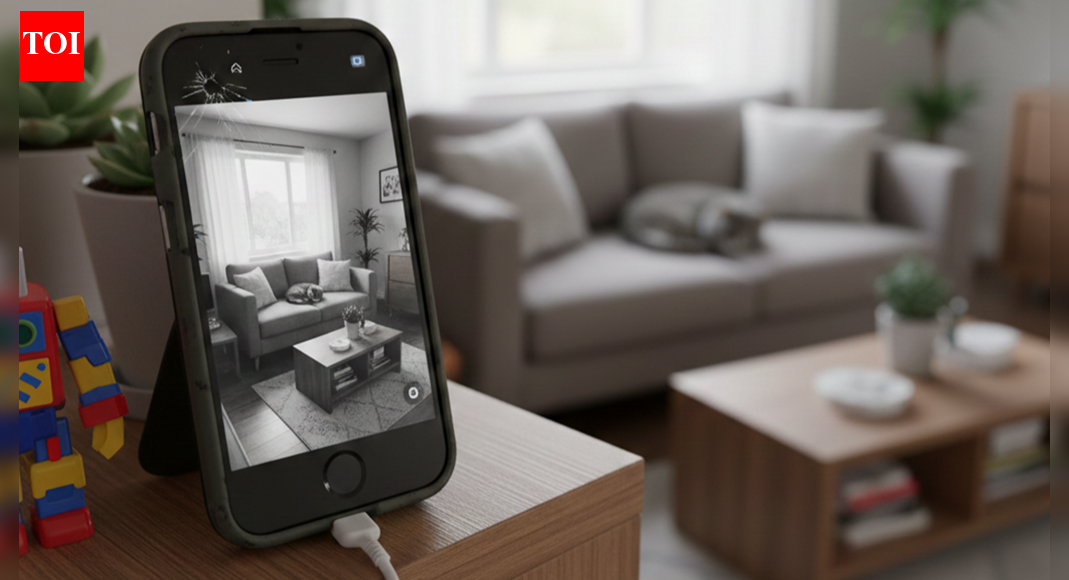
A private security camera registry program entails residents “do[ing] their part for crime prevention” by informing police of the location of their CCTV cameras, and effectively contributing to a citywide police database.
Some argue that registries make investigations faster, as they would allow officers to locate footage more easily and contact camera owners directly to request access to recordings.
Police forces in other provinces are already using similar registries.
In 2020, the Alberta RCMP launched the Community Assisted Policing Through Use of Recorded Evidence (CAPTURE) program, inviting residents to give police access to their video cameras with an outdoor view, and several police forces in Ontario have partnered with web-based registry CAMSafe.

What’s their vision for the city? What will Montreal look like at the end of their mandate? We ask the questions you need to hear before you head to the polls on Nov. 2.
But it’s unclear whether granting police knowledge of private security cameras’ locations across neighbourhoods in a registry would speed up police investigations.
A 40-year systemic review of the effects of CCTV on crime prevention in countries such as the U.K., the U.S. and Canada suggests that the use of CCTV cameras leads to a modest decrease in crime (13 per cent overall), namely in parking stations and residential areas.
However, the same 2019 review led by researchers at City University of New York, Northeastern University and Cambridge University also notes that a body of research on the potential investigatory benefits of CCTV has not yet emerged.
Experts also say the voluntary nature of the registry likely wouldn’t stop police from legally seeking footage from a security camera they know exists.
If footage is stored in the servers of a company — as is the case for residents who use Amazon’s Ring doorbell camera, for example — hypothetically, once police become aware of a security camera, officers could try to obtain a warrant and ask the camera owner, or the company, to share the footage for an investigation.
Normalizing the neighbourhood watch
Although participation in camera registries may be touted as voluntary, pressure from neighbours to participate in order to “protect” the community could lead camera owners into behaving as agents of the state.
Kristen Thomasen, chair in law, robotics and society and an associate professor at the University of Windsor, said that a security camera registry would essentially create a “network of surveillance that is initiated by law enforcement.”
“There’s so many potential ways that this could become problematic,” Thomasen said.
For one, if neighbours want footage to be submitted to police, “that puts pressure on people you live in the community with to provide video footage in ways that they might wish not to,” she said.
Moreover, Thomasen explains that extensive monitoring can “create a sense” of a gated community in neighbourhoods that lack the same physical barriers, potentially leading to more division.
The use of cameras “completely changes the dynamic of how we interact with one another,” particularly when they are used to enforce the law, she said.
Cameras may give false sense of security
Action Montréal’s Thibodeau takes surveillance a step further by promising to deploy smart surveillance cameras in “vulnerable zones” and increasing “targeted patrols where crimes, thefts and incivilities are most frequent.”
Neither Ensemble Montréal nor Action Montréal responded to a request for comment in time for publication.
However, Thomasen warns that there have been instances where network cameras have been hacked.
“A lot of people will install them, very understandably, because they want a sense of safety around their home, but it actually introduces this new sort of safety weakness into the home,” Thomasen said.

Security cameras powered by artificial intelligence that have advanced features, such as facial recognition and behaviour analysis, could be used to target specific citizens. In particular, they could impact Indigenous and Black people — members of historically marginalized groups who have been disproportionately policed.
Ana Brandusescu, an AI governance researcher and PhD candidate at McGill University, says automating law enforcement through surveillance cameras might lead to abdicating police responsibility and reproducing biases.
“The problem is that in policing and surveillance, there’s this systemic racism that needs to be addressed. And so any technology like facial recognition can exacerbate those harms,” Brandusescu said.
Where the parties stand on public security
Project Montréal Leader Luc Rabouin is advocating for police officers to wear body cameras. He would install more lighting in public spaces and deploy mixed teams consisting of police and social workers to respond to situations involving vulnerable people.
In addition to supporting a private camera registry and police body cameras, Martinez Ferrada with Ensemble Montréal would hire 230 constables to cover the Société de transport de Montréal (STM) network. She would improve the lighting of public spaces and call on teams made up of police and social workers for interventions. She would also increase public safety committees in neighbourhoods.

Transition Montréal Leader Craig Sauvé said in September that contrary to parties that “rely on technological fixes,” his party considers municipal workers essential to the city’s operations, but he did not make promises specifically on surveillance technology. His party would limit interventions of the Montreal police to urgent security issues by establishing a new civil service consisting of health and social services professionals.
Along with his promise to increase neighbourhood patrols and security cameras, Kacou with Futur Montréal would create a police squad targeting violence and drug trafficking downtown. He is also in favour of police wearing body cameras and says he would improve the integration of technological evidence in the judicial system but did not specify how.
Besides advocating for smart surveillance cameras and patrols in vulnerable neighbourhoods, Thibodeau with Action Montréal would support police wearing body cameras. He would also regulate religious gatherings through police enforcement.
For more information on candidates’ platforms, browse CBC’s Montreal municipal election platform tracker.
link