Top 7 must-read space technology stories of 2025

We’ve been to the Moon and sent rovers to Mars, but the 21st century demands a much bolder vision.
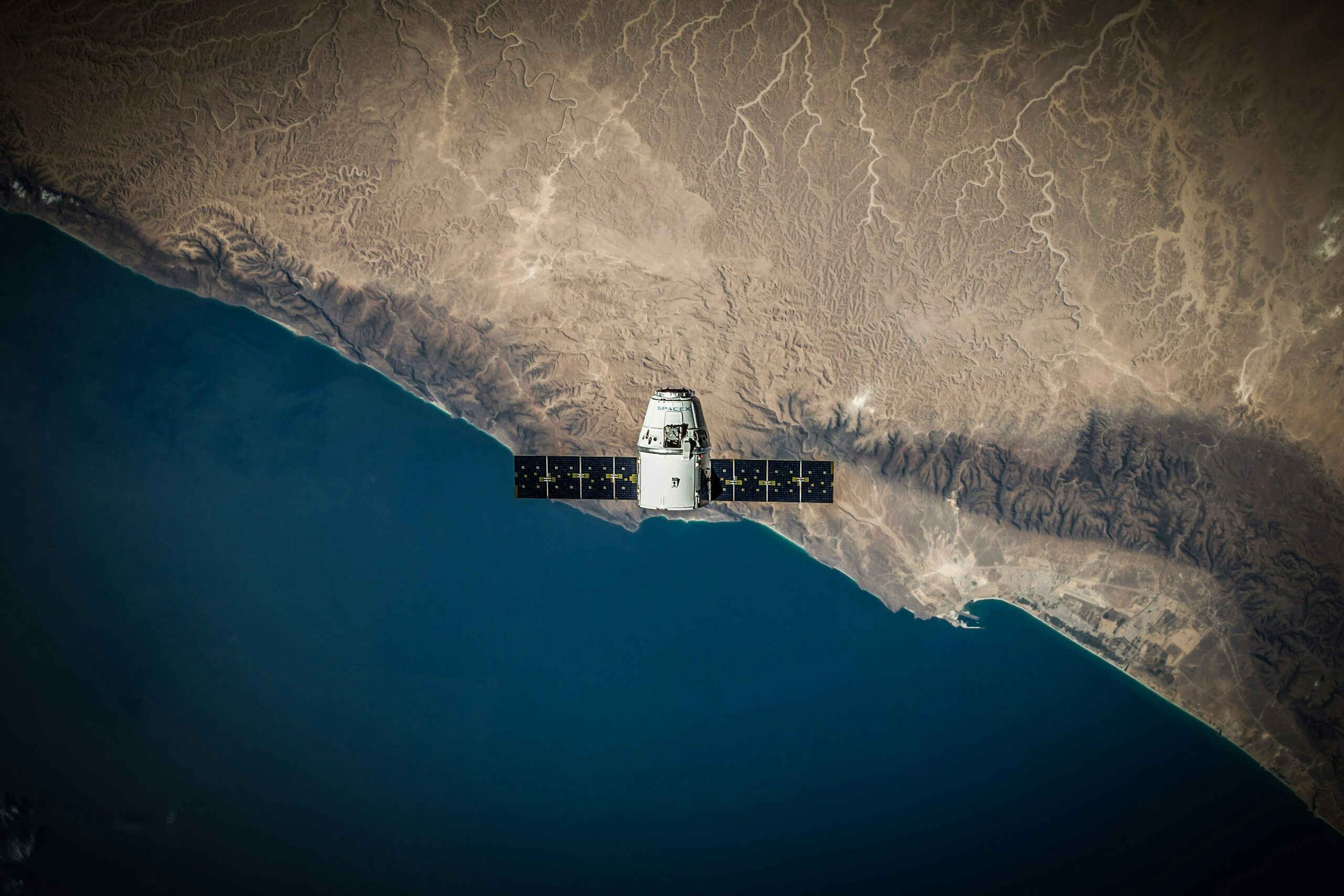
In 2025, the focus of space exploration shifted from simply reaching a destination to mastering the journey.
From plasma engines that could make a trip to Mars feel like a short flight, to clever new ways of “cleaning up” space junk without even touching it, the technology is moving faster than ever.
Space is now also providing direct benefits to people on Earth, as new technologies are being tested to capture solar power in orbit and send it back to Earth as a 24/7 source of clean electricity.
Interesting Engineering has been right here with you all year, keeping a close eye on the developments in space and bringing them straight to your screen.
As the curtains close on 2025, we’re recapping the year’s most transformative breakthroughs in space technology — from game-changing plasma engines to the dawn of space-based solar energy.

In February, Russian scientists from Rosatom unveiled a laboratory prototype of a plasma electric rocket engine that could fundamentally change interplanetary logistics.
In comparison to chemical rockets that burn fuel in a single burst, this engine uses a magnetic plasma accelerator to provide continuous thrust. The goal is to reduce the perilous 9-month journey to Mars to just 30–60 days.
Shorter travel times reduce astronauts’ exposure to harmful cosmic radiation and the physiological toll of deep-space transit. Extensive ground testing is underway, with a flight-ready model expected by 2030.

Researchers at Tohoku University addressed the growing crisis of orbital debris with a “contact-free” cleanup method. Particularly, the team developed a bidirectional plasma ejection thruster that allows a satellite to deorbit junk without ever touching it.
The system works by a satellite firing a plasma beam at a piece of debris to slow it down (causing it to burn up in the atmosphere) while simultaneously firing a second beam in the opposite direction to keep itself stable. This technology addresses the growing problem of orbital congestion caused by defunct satellites and rocket stages.
While older techniques require “grabbing” debris — which can lead to crashes — this new system works from a distance, removing the risk of a collision.

In September, Ohio State University engineers introduced the Centrifugal Nuclear Thermal Rocket (CNTR). This design moves away from known solid-fuel nuclear engines toward liquid uranium. The design is projected to achieve a specific impulse of 1,800 seconds, making it four times more efficient than chemical engines and twice as powerful as the nuclear designs of the 1960s.
The engine isn’t picky about its fuel; it can run on substances like ammonia or methane. This means future spacecraft could stop at asteroids or distant icy objects to gather more propellant, making long-term exploration much more practical.

The most “sci-fi” development of the year came from the Project Hyperion Design Competition. The winning entry, Chrysalis, is a theoretical 36-mile-long interstellar starship designed to carry 2,400 people to Alpha Centauri, the closest stellar neighbor.
Because the trip to Proxima Centauri b would take 400 years, the ship is a “generational” vessel where entire lives would be spent in transit. It features a “nesting doll” structure with artificial gravity, forests, and schools, powered by (as yet theoretical) nuclear fusion.
“The generational spaceship Chrysalis is named after the intriguing possibility of having a spaceship capable of keeping its inhabitants safe and united, generation after generation, until they arrive in the new solar system,” the mission pitch noted.

NASA’s Voyager 1 continues to make history even as it enters its 48th year of operation. It is on track to become the first spacecraft to venture one light-day away from home, a distance so vast that light itself takes 24 hours to bridge the gap. The spacecraft is now so distant — roughly 15.7 billion miles away — that it takes nearly 23 hours, 32 minutes, and 35 seconds for a message from Earth to arrive at its antenna.
By November 15, 2026, Voyager 1 will be so far away — approximately 16.1 billion miles — that a command sent from Earth will spend an entire day traveling through the void before it arrives. Communicating with the probe will then require a 48-hour round-trip for each command and confirmation. It is a sobering reminder of the sheer scale of the interstellar void.

In 2025, California-based startup Auriga Space emerged as a key player in the “kinetic launch” sector. Unlike traditional rockets that burn massive amounts of fuel to lift off, Auriga is developing an electromagnetic launch track.
This electromagnetic system uses high-powered magnets to propel a vehicle to six times the speed of sound on a specialized track before launching it into the upper atmosphere.

Closing out the year, the U.S. firm Star Catcher Industries broke world records at NASA’s Kennedy Space Center by beaming 1.1 kW of wireless electricity over a long distance. They surpassed the US Defense Advanced Research Projects Agency’s (DARPA) previous record, using multi-wavelength lasers to “supercharge” standard solar panels.
Interestingly, the company plans to build an orbital power grid that beams energy directly to satellites, allowing them to operate with 2 to 10 times more power without the need for larger, heavier solar arrays.
Stay tuned with IE for more updates and insights on the top seven developments of 2025 in Science, Robotics, Military, Nuclear Energy, and more.
link