This new space technology could make interstellar travel possible without fuel
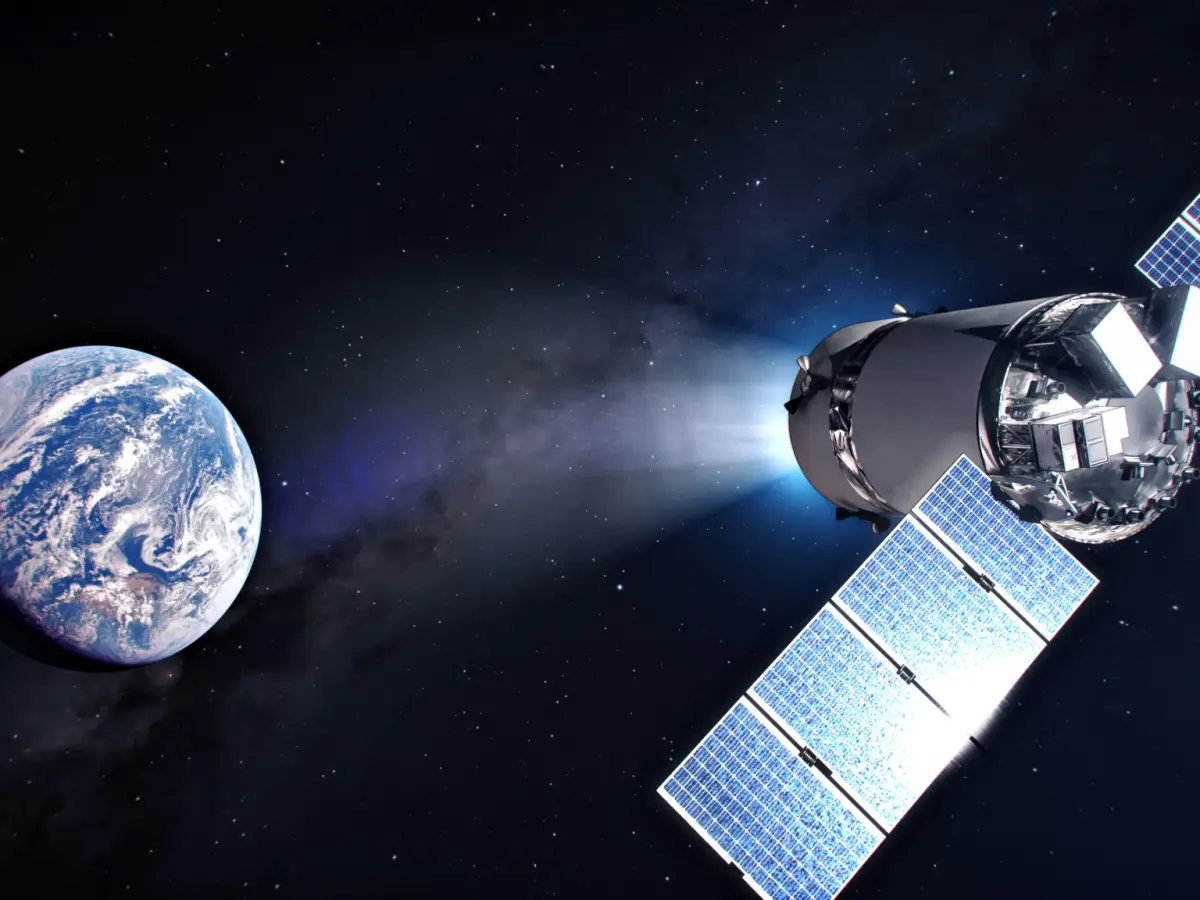
Space exploration has always been bound by one limitation: fuel. Every rocket ever launched has depended on carrying vast amounts of propellant, which both enables and restricts its mission. The more fuel a spacecraft carries, the heavier it becomes, forcing engineers into a delicate balance between thrust and payload. This fundamental constraint has defined spaceflight since the early 20th century, when Konstantin Tsiolkovsky first derived the rocket equation. But a new wave of research suggests a future where spacecraft may not need to carry fuel at all. A comprehensive new review ton the arXiv preprint server explores several ‘propellantless’ propulsion systems that harness natural forces, potentially rewriting the rules of space travel.
Solar sails: Riding on light itself
Among the most mature of these technologies are solar sails, which use the pressure of sunlight to push spacecraft forward. The principle is simple yet powerful: photons from the Sun exert a minute but continuous force on a large, reflective sail. Over time, that steady push can accelerate a spacecraft to remarkable speeds. Japan’s IKAROS mission successfully demonstrated this technique in 2010, using sunlight alone to reach Venus. Solar sails require no fuel, allowing near-continuous acceleration, but their effectiveness fades with distance from the Sun as solar radiation weakens. Constructing and maintaining the vast, ultralight sails also presents formidable engineering challenges, especially for long-duration missions into deep space.

The oldest and most proven propellantless technique is the gravity assist, in which spacecraft gain speed by passing close to a planet and stealing a fraction of its orbital momentum. NASA’s Voyager probes used this method to tour all four outer planets in a single mission. Gravity assists have the advantage of requiring no new materials or technology, only precise planning and timing. Their drawback lies in their dependence on planetary alignment: the right opportunities occur rarely, and once set, a trajectory can be difficult to adjust. Still, gravity assists remain a cornerstone of efficient mission design and a model for how natural forces can substitute for propellant.
Magnetic and electric sails: Harnessing the solar wind
Newer concepts aim to exploit the Sun’s constant outflow of charged particles, the solar wind. Magnetic sails would use vast superconducting loops to generate magnetic fields that deflect this plasma, producing thrust. Electric sails take a lighter approach, deploying long charged wires to repel solar wind protons. Both systems promise continuous acceleration without fuel and could outperform solar sails over long periods. Yet the technological hurdles are enormous: magnetic sails might require coils tens of kilometres wide, kept at cryogenic temperatures, while electric sails depend on ultra-thin, power-intensive tethers.
Each of these methods offers a different path to escaping the tyranny of fuel. Gravity assists already work, solar sails are operational, and magnetic or electric sails may one day extend human reach far beyond the solar system.
Related Stories
link