Solar-Powered Manufacturing: A Sustainable Energy Shift | Manufacturing Engineering & Technology
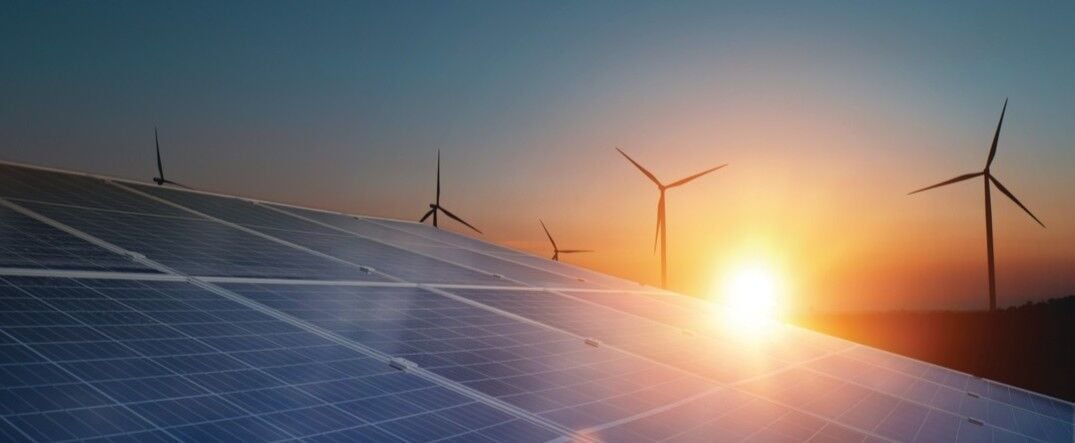

Imagine pulling into your work parking spot and leaving your vehicle in a shaded carport topped by solar panels that generate electricity for the lights and equipment inside the building.
Since 2023, that’s what workers at a First Solar Inc. production facility in Ohio have done. As such, they’ve followed in the footsteps—or tire tracks—of First Solar facilities in Germany, Vietnam and Malaysia.
Why should other companies follow First Solar’s lead? Helena Jochberger, global industry lead for information technology and business consultant firm CGI Inc., Montreal, outlined the strategic benefits for using use renewable energy.
“It not only reduces their carbon footprint and aligns them closer with ESG (environmental, social and governance) commitments and regulations, distributed energy resources (DERs)—like solar panels, wind-generation units and battery storage—empower companies to boost energy independence and resilience over a long period of time,” she explains. “By harnessing DERs to become their own energy producers, manufacturers take a more active role in their energy future in a market that is constantly changing. This makes achieving sustainability from an ESG and economic standpoint far more attainable.”
But implementing renewables is just the first step, according to Jochberger. Next is collecting data to demonstrate sustainability efforts and achievements. She cautions that when building a sustainability road map, companies need to collect accurate data about every step of their production process, from raw materials to a finished product.
“Leveraging digital tools like Internet of Things (IoT)-enabled energy monitoring and digital twins to help manufacturers deploy and monitor their renewable energy strategies can create even more value,” she says. “By tracking their progress and identifying inefficiencies in real time, manufacturers can not only generate their own power and reach net zero—they can do so efficiently and at scale.”
CGI client LKAB Minerals Ltd., a public iron ore mining company in Sweden, is in a joint effort to use hydrogen in its operations to reduce CO2 emissions, with the goal of fossil-free steel by 2035. Although solar power is not in its arsenal, LKAB does use alternative energy from wind and hydropower.
“If you have started that transition (to alternative energy), speed up,” Stefan Savonen, LKAB’s vice president of energy, advised in a recent podcast. “If you haven’t started, it’s time to start. Climate is a driving force, but a large part is also business. There is this huge business opportunity for the company, for yourself and for your well-being to start now … no time to lose.”
As a solar panel manufacturer, it’s no surprise that First Solar would have taken Savonen’s advice as well as the extra step of installing shaded photovoltaic (PV) carports. But the company’s solar efforts go beyond this.

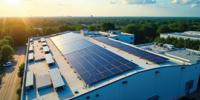
Globally, First Solar’s PV arrays generated 7.5 million kWh in 2023, according to the company’s 2024 Sustainability Report. At an average yearly use of 10,800 kWh in an American home, that’s enough energy to power nearly 700 homes.
In 2021, First Solar set a goal of using 30% less energy per watt produced by 2028, compared with its 2020 usage. By 2023, it was halfway to that metric. And by 2026, First Solar set a target of powering 100% of its U.S. operations with renewable energy. It set a similar goal—100% renewable energy—for global operations by 2028.
In addition to PV carports, the company uses a variety of tactics to meet these goals, First Solar said in the 2023 report. “Since 2009, we have successfully reduced our greenhouse gas (GHG) emissions, energy, water and waste intensity per watt produced by implementing resource conservation and low-carbon projects at our facilities and through improvements in module efficiency, manufacturing throughput, manufacturing yield and capacity utilization.”
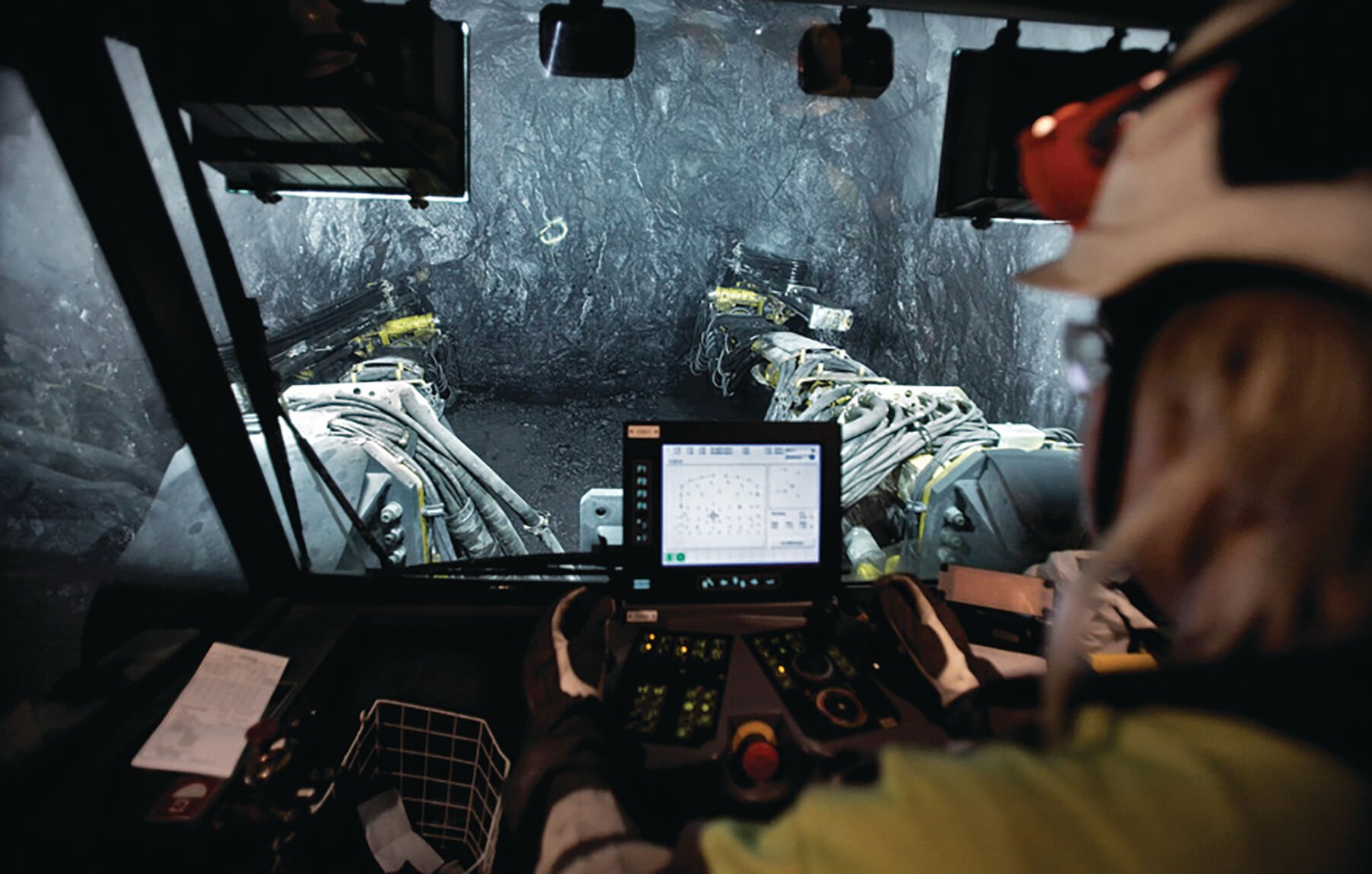

LKAB, a public iron ore mining company in Sweden, is in a joint effort to use hydrogen in its operations to reduce CO₂ emissions, with the goal of fossil-free steel by 2035. Although solar power is not in its arsenal, LKAB does use alternative energy from wind and hydropower.
Let the Sun Shine
By the end of 2023, the U.S. had an estimated total solar capacity of 139 gigawatts (GW)— an increase of more than 26 GW or 23% from 2022, according to Climate Central’s report, “A Decade of Growth in Solar and Wind Power.” Citing data from the U.S. Energy Information Administration (EIA), the report says U.S. installations produced 238,121 GWh (GWh) of electricity from solar in 2023—more than eight times the amount generated in 2014.
Utility-scale solar capacity accounts for about two-thirds of all U.S. solar capacity. In 2023, utility-scale solar comprised around 8% of the nation’s total electricity capacity from all utility-scale sources (renewables, nuclear and fossil fuels), compared to about 1% in 2014, Climate Central says. And most of the nation’s new energy capacity is expected to come from renewable sources such solar and wind— shifting the energy mix away from fossil fuels (coal, oil and natural gas) that produce carbon pollution, EIA forecasts.
Much of the capacity is being used by the manufacturing industry–and such efforts are becoming increasingly visible. Drivers on northbound Interstate I-75 in Saginaw, Mich., for example, can’t help but be struck by some 17,000 solar panels that help power Nexteer Automotive Group Ltd.’s facility, which supplies motion-control technology to domestic and international automakers. Developed in partnership with NorthStar Clean Energy, a subsidiary of CMS Energy Corp. that is the parent company of Michigan utility Consumers Energy, the prominent array started providing renewable energy to the 25-acre site in May 2024.
In addition to reducing operational costs, Nexteer expects the following results from its Saginaw solar array:
Lowering GHG emissions by 7,000 metric tons annually, which is equivalent to saving about 788,000 gallons of gasoline per year, based on the Environmental Protection Agency’s conversion calculator
Preparing Nexteer for growing expectations of its OEM customers for a sustainable supply chain
Supporting progress toward global clean-energy transition via enablers such as renewables, energy efficiency and electrification—as well as the United Nations’ Sustainable Development Goals, such as: Affordable and Clean Energy (No. 7); Industry, Innovation and Infrastructure (No. 9); and Climate Action (No. 13)
One-fifth of Nexteer’s global energy comes from renewable sources, according to its 2024 Sustainability Report. “We continue to advance our climate road map strategy across global operations based on a portfolio of energy-efficiency measures, solar projects and power purchase agreement (PPA) initiatives (see sidebar p. XX). Additionally, efforts like our PPA in Mexico are supporting regional and community goals to green the electric grid,” according to the report.




Power Sharing
Three General Motors Co. assembly plants get their electricity from NorthStar’s 410,000-mWh Newport Solar project in Newport, Ark., through a 15-year PPA. Although the project’s half-million First Solar solar panels are arrayed on 2,000 acres in Arkansas, the power they generate supplies GM plants in Michigan and Missouri.
The PPA is the automotive company’s largest one yet, and a milestone in GM becoming carbon-neutral by 2040.
In 2022, GM finalized agreements to secure 100% of the electricity needed to power all of its U.S. sites with renewables by the end of 2025, according to an August 2024 article in GM News. However, the company’s 2023 sustainability report “Journey to Zero” reported it achieved just 39% of its goal of “sourcing 100% renewable electricity globally by 2035.”
While Nexteer and GM use huge solar arrays that occupy acreage to power their operations, others in the manufacturing sector plan to use rooftop solar to source their electricity, depending on the level of their energy use and their geographic location, according to a 2023 study by a group of engineers at Northeastern University.
“Our findings show that light manufacturing sectors such as furniture and apparel can cover their average net annual electricity demand by utilizing their own rooftop potential in locations across the country, while several other sectors can achieve electricity self-sufficiency but in a smaller subset of U.S. locations,” the authors wrote in “Technical Feasibility of Powering U.S. Manufacturing with Rooftop Solar PV.”
In spring and summer, nearly 40% of three-digit manufacturing sectors (i.e., specific subsectors in the North American Industry Classification System) could utilize solar PV for their electricity needs in the U.S. Southwest, according to the study.
“Regions like the Southeast that have a large concentration of low-electricity-intensity furniture and textile product operations will have greater opportunities to convert to full on-site generation,” according to the study. “In contrast, high-electricity-intensity food processing operations in the Southwest will struggle to generate enough electricity on-site to cover demand, despite a favorable solar resource.”
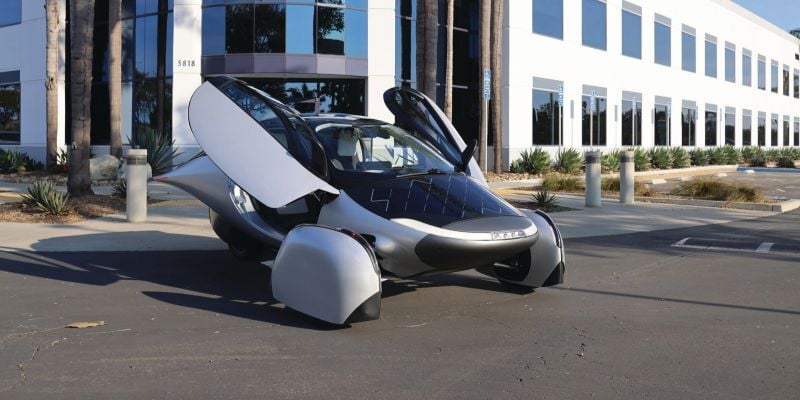

Aptera builds its solar car in a building whose electricity is generated from rooftop solar panels.
Results Start on the Roof
Two companies using rooftop solar include a Midwest-based furniture manufacturer and a solar-car startup in California.
In 2019, Ashley Furniture Industries Inc., Arcadia, Wisc., embarked on a multiphase project to install solar panels on 10 of its largest U.S. facilities, including its advanced manufacturing headquarters in Arcadia.
Throughout the company’s advanced manufacturing and warehousing operations, solar energy is used to charge IoT systems, automation and robotics, and battery-powered industrial vehicles. Ashley’s solar panel installations are expected to generate about 25 million kWh annually, according to an update in the company’s 2024 Corporate Social Responsibility report.
At Aptera Motors Corp., Carlsbad, Calif., the vehicle maker’s product-design goal meshes with that of its building’s owner. Aptera’s solar-powered vehicle’s battery, frame and body are produced in a two-story facility topped by 892 Silfab solar panels. “The system’s estimated annual output of 703,284 kWh provides nearly all the energy that Aptera will use each year,” according to a Silfab Solar case study.
“The fusion generator in the sky, the sun, is a renewable energy source that we will continue to utilize in every shape and form,” Aptera Co-CEO Chris Anthony said in another case study.
“Our mission is clear: move towards a sustainable future that empowers people around the world to get where they need to go with less impact on the planet and little need to pull from an external power source,” Anthony continues. “We hope to inspire other companies to do the same, and we could not be prouder of the brighter future we are building.”

link