A Solution for Real-Time Traffic Monitoring
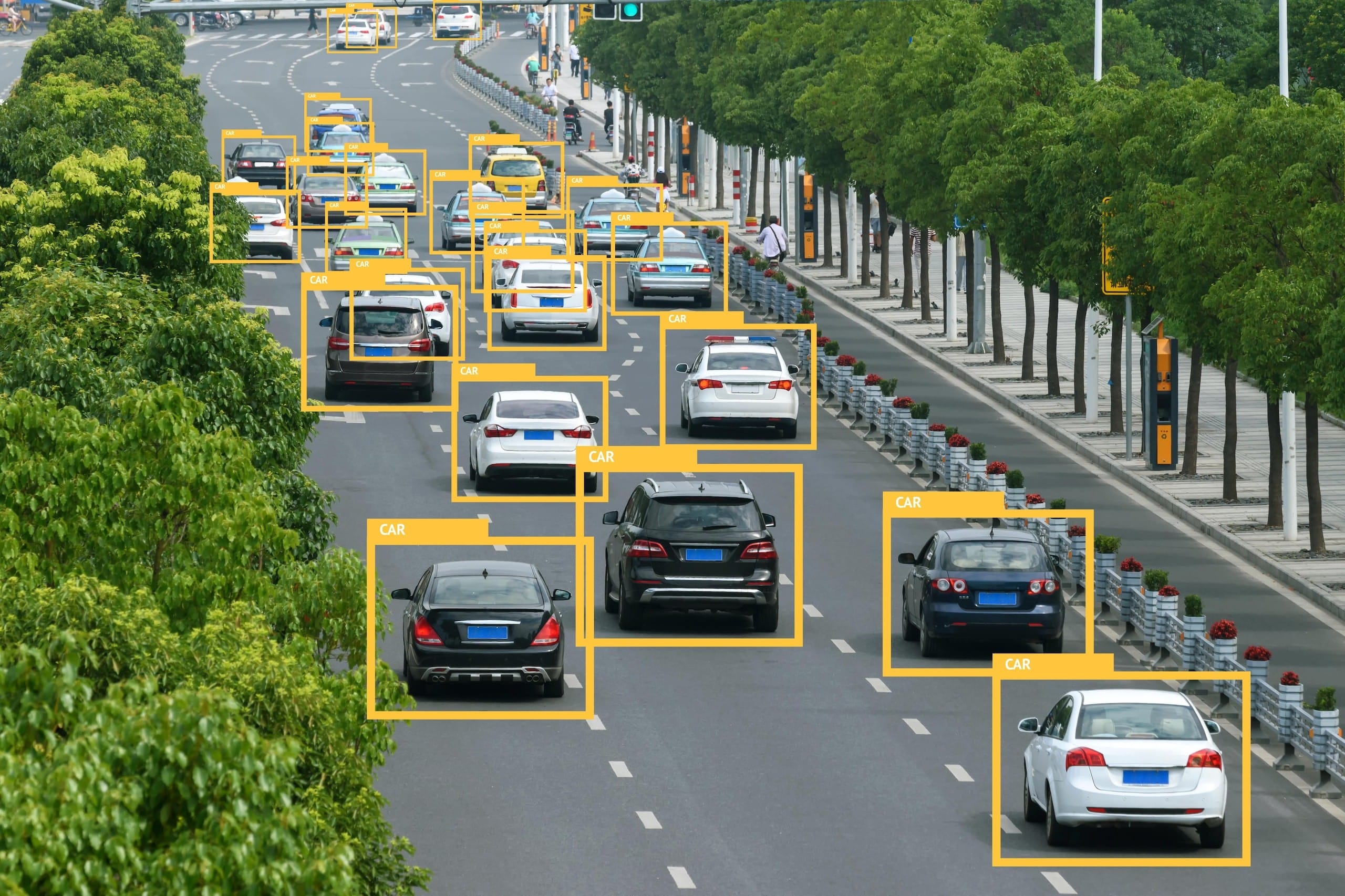
In today’s rapidly urbanizing world, traffic congestion is a significant challenge for managing transportation in large cities. As the number of vehicles increases, developing effective systems to monitor and analyze traffic flow becomes crucial. One of the most promising solutions involves using Closed-Circuit Television (CCTV) cameras to detect and count vehicles in real time.
The importance of vehicle detection
Vehicle detection is a key task in traffic management systems. By providing accurate, real-time information about the number of vehicles on the road, these systems help anticipate traffic jams and optimize traffic flow.
An effective system can adjust its parameters based on the camera position to estimate traffic flow accurately. If the detected number of vehicles exceeds a predefined threshold, an alert is triggered to signal potential congestion.
Advantages and challenges of video surveillance-based systems
Systems using video surveillance cameras offer several advantages:
- Ease of installation: These cameras can be installed near or above roadways without requiring significant modifications to existing infrastructure.
- Real-time analysis: Videos can be analyzed instantly, providing valuable data for traffic management.
However, these systems also face several challenges, including:
- Lighting variations: Changes in brightness can affect vehicle detection, necessitating the use of robust algorithms.
- Occlusions: Vehicles may be partially obscured, complicating precise detection.
An innovative method for vehicle counting
As urban areas expand, efficient traffic management has become crucial for reducing congestion and improving road safety. Traditional vehicle counting methods often struggle with accuracy in dynamic environments.
To address these challenges, innovative deep learning techniques have emerged as powerful solutions, enhanced vehicle detection and counting capabilities. By leveraging these advanced approaches, we can achieve more precise and reliable vehicle counting, contributing to smarter traffic management systems.
Deep learning has transformed computer vision and traffic management, introducing several effective methodologies for vehicle counting:
- Image processing and feature extraction: Convolutional Neural Networks (CNNs) automatically learn features from raw images, enabling the recognition of complex vehicle patterns without manual extraction.
- Background modeling: Techniques like Generative Adversarial Networks (GANs) or autoencoders model the background effectively, distinguishing moving vehicles from the static background, even under varying light and weather conditions.
- Object detection: Models such as YOLO (You Only Look Once) or Faster R-CNN identify and localize vehicles in real time, providing bounding boxes for accurate counting.
- Tracking and counting: Deep learning algorithms can track vehicles across frames, using methods like Kalman filters to ensure consistent identification, allowing for accurate counting as vehicles cross designated points.
In conclusion, the integration of CCTV technology for real-time traffic monitoring presents a promising solution to the growing challenges of urban congestion.
By leveraging advanced vehicle detection and counting methods, particularly those enhanced by deep learning techniques, traffic management systems can provide timely and accurate data crucial for optimizing traffic flow and enhancing road safety.
While video surveillance systems offer notable advantages such as ease of installation and real-time analysis, they must also address challenges like lighting variations and occlusions to ensure reliability.
As cities continue to evolve, embracing these innovative solutions will be essential in creating smarter, more efficient transportation networks that can adapt to the ever-changing dynamics of urban traffic.
link