UND partners with space and defense leader Voyager Technologies
‘Multi-decade partnership’ will boost region’s space, UAS and defense ecosystem, says Voyager president and co-founder
When describing UND’s work in the domain of space, UND President Andy Armacost sometimes employs the Buzz Lightyear phrase “To infinity and beyond!” to capture the University’s seemingly limitless potential for innovation and growth.
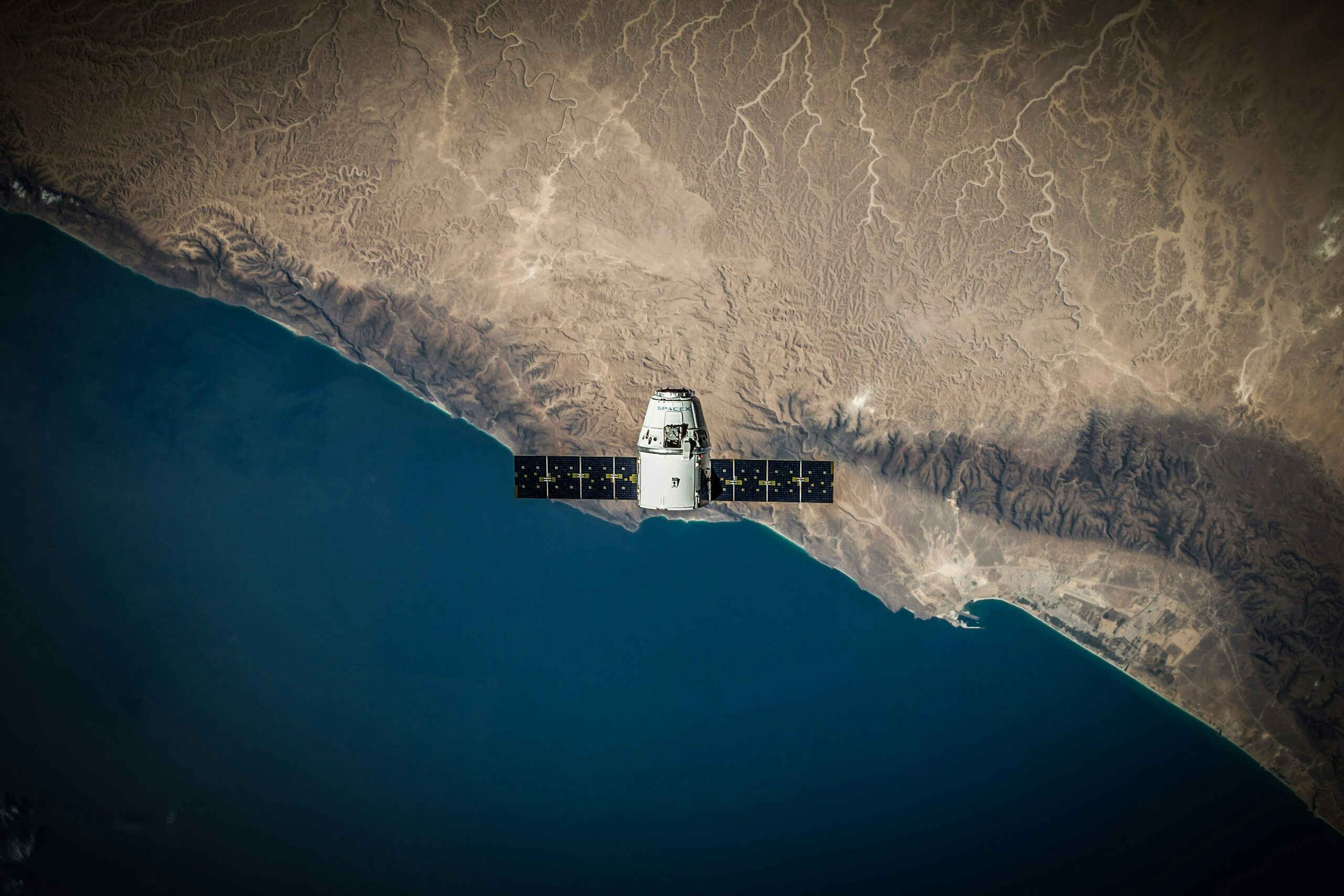
On Monday, UND furthered this momentum by signing a partnership with Voyager Technologies, a space engineering firm leading the effort to replace the aging International Space Station. Working alongside European multinational aerospace corporation Airbus and government entities including NASA and the European Space Agency, Voyager is developing a low-Earth-orbit commercial space station called Starlab.
The station is set to launch in 2029, in advance of the International Space Station’s planned decommissioning in 2030.
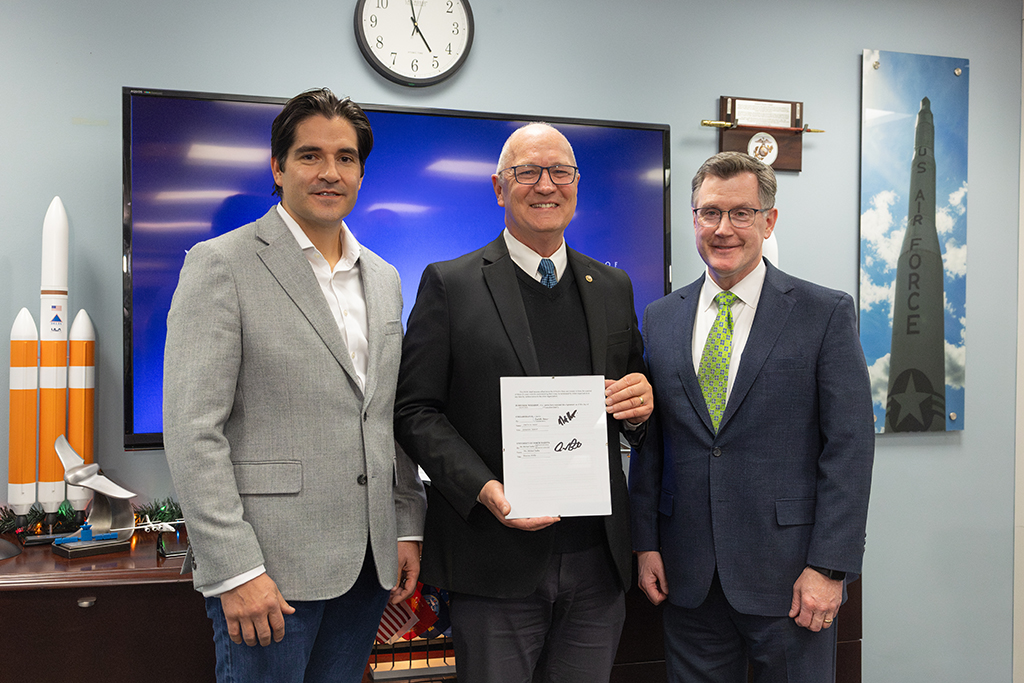
Attending the signing ceremony – held in the Washington office of North Dakota U.S. Sen. Kevin Cramer – were Armacost, UND Vice President for Research & Economic Development Scott Snyder and Matt Kuta, president and co-founder of Voyager.
The agreement, which Kuta called “a multi-decade partnership,” is a natural fit for UND, Armacost said. He cited the University’s portfolio in space-related topics including satellite testing and design, space agriculture and spacesuit construction.
“The alliance we are creating through this agreement enhances the strength of both Voyager and the University of North Dakota,” Armacost said. “The state Legislature has enabled us, through generous funding, to build our portfolio in national security research – and this partnership allows us to take it to new levels.
“We’re looking forward to Voyager’s presence in Grand Forks,” Armacost added. “It’s already started, and we’re looking forward to how that continues to grow and to push the frontiers of science, research and discovery.”
Cramer said the partnership is a testament to UND’s leadership in space. Since becoming in 2021 the first member of the University Partnership Program of the U.S. Space Force – a service branch created in large part due to legislation introduced by Cramer — UND has continued to build its ecosystem.
Kuta said the partnership will focus on collaboration in the disciplines of national security and machine learning – fields in which UND is well-equipped to contribute.
“Voyager’s partnership with the University of North Dakota represents a powerful convergence of academic research and commercial execution,” he said. “We’re expanding our ability to enhance crewed missions and long-duration Starlab spaceflight while also strengthening U.S. leadership across both civil and defense sectors.
“Voyager and UND are going to be contributing significantly to the development of some very exciting assets.”
Voyager also operates a worldwide network of science parks titled the Voyager Institute for Space, Technology and Advancement, providing lab space for industry partners to conduct space related research.
“Think of it as a facility where universities, companies and customers can send research and development to a single location,” Kuta said. “They can then test it at the space station in a microgravity environment.”
More from Author

link