


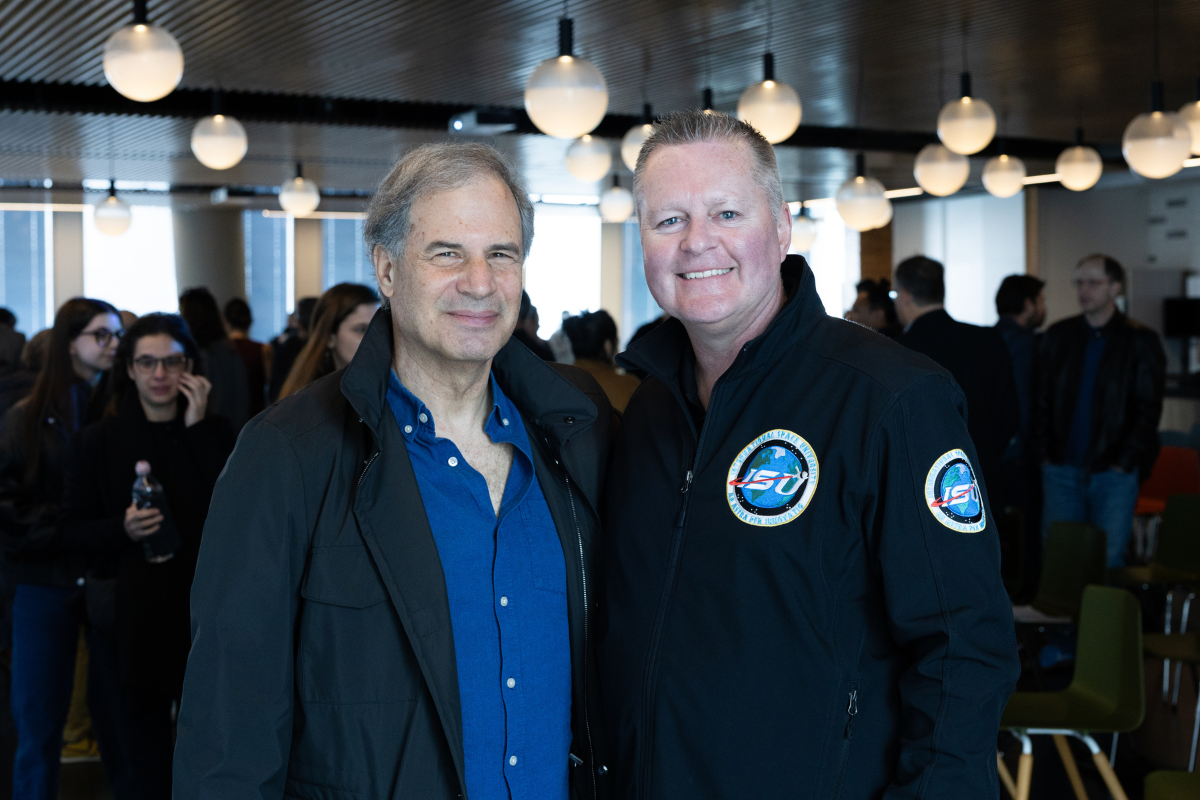
In his article below, John Wensveen, President of the International Space University (ISU), dives into Israel’s emerging leadership following the recent Israeli Space Week 2026. Wensveen highlights Israel’s focus on collaborative innovation and interdisciplinary education.
As chancellor of the ISU, I have witnessed first-hand the deep connection between Israeli space exploration and the university’s global academic vision. Together, we may frame space not merely as a technical frontier, but as a vital platform for international diplomacy and peace.
From Earth to Orbit: Why Israel’s Space Leadership Matters More Than Ever / John Wensveen
At a time when the world feels increasingly fragmented by conflict, competition, and uncertainty, space remains one of the few domains where cooperation is still not only possible, but essential. Satellites do not recognize borders. Climate data does not belong to one nation. And the future of space will be shaped not by isolation, but by collaboration.
It is precisely this that made the Israel Space Week (25–29 January) stand out, as a celebration of technology and of leadership. Israel is not only building space technology; it is educating people and shaping the values that will define the future of space.

Legacy as a Launchpad
At the heart of the week was the Ilan Ramon International Space Conference, named in honor of Israel’s first astronaut. His legacy continues to resonate far beyond Israel, symbolizing courage, curiosity, and the belief that space can unite humanity around a shared purpose.
The conference hosted astronauts, educators, and innovators from across the globe to address pressing matters: How do we prepare the next generation for a rapidly evolving space economy? How do we ensure that innovation is balanced with responsibility? And how can space remain a force for peaceful engagement rather than division?
The success of the conference and the Israeli Space Week was driven by the Rakia Mission, whose leadership allowed an open and professional dialogue within the community. Rakia exemplifies Israel’s unique ability to convene global stakeholders while nurturing a domestic space ecosystem.
Education as Strategic Infrastructure
Throughout the week, we’ve unfolded the importance of human capital determining space’s success. As space activity expands beyond government programs into commercial, entrepreneurial, and dual-use domains, the need for interdisciplinary education has never been greater.
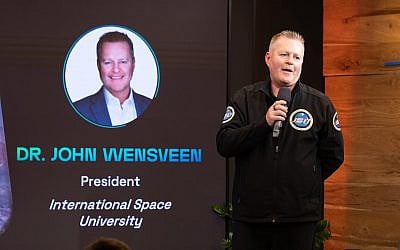
At the heart of the event, I led a main-stage panel with global leaders including astronauts Charlie Bolden, André Kuipers, and Mark Pathy, alongside Israeli higher education leader Dr. Maya Lugasi Ben Hamo. Together, we explored how space, academia, and workforce development are converging. The conclusion was unmistakable: tomorrow’s space professionals must be fluent not only in science and engineering, but also in ethics, sustainability, and international cooperation.
Looking Ahead to 2035
Israel Space Week also looked well into the future. The “Space Tech – Trends & Forecasts 2035” event examined how space is converging with artificial intelligence, data analytics, climate monitoring, security, and commercial services.
These discussions highlighted Israel’s strengths in systems thinking and dual-use technologies, while reinforcing the need for long-term policy, regulation, and global coordination. As space becomes increasingly embedded in daily life on Earth, the ability to think holistically will define leadership.
A Global Community, With Israel at the Center
One of the most powerful moments of the week was the ISU Alumni Meetup, bringing together more than 150 alumni, astronauts, partners, and space leaders. Featuring Israeli astronaut Eytan Stibbe, the evening showed Israel’s role as a global convening point for space dialogue.
During the reception, ISU shared progress on its MOON SHOT 2030 strategy, focused on academic innovation, workforce development, global partnerships, and financial sustainability. Israel’s space ecosystem plays an important role in this vision, serving as both collaborator and catalyst.
Space as Diplomacy
Beyond the formal sessions, Israel Space Week offered connection. The open conversations reinforced why Israel commands such respect in the global space community. Its entrepreneurial mindset and ability to translate ideas into impact are precisely what the future of space requires.
As space becomes more crowded and competitive, leadership will be measured not only by technological capability but by values.
From Earth to orbit, Israel is demonstrating that space can serve as a platform for cooperation rather than conflict; a domain where nations meet not as rivals, but as partners in a shared human endeavor. In an uncertain world, that may be one of the most important contributions to the future.
John Wensveen, Ph.D.
President
International Space University (ISU)
Impact investor, philanthropist and pilot, Eytan Stibbe was the second Israeli astronaut to ever go to space. As a crew member of the Ax-1 mission, in April 2022, Eytan spent 17 days on the International Space Station. Together with the Ramon foundation and the Israeli Space Agency, a work plan was assembled and called the RAKIA mission. It included experiments in medicine, earth observation, production in space as well as educational programs and art, all under the banner “There is no dream beyond reach”.
link