Middle East Renewable Energy Market Size, and Growth Report, 2032
Key Highlights
| Study Period | 2019 – 2032 |
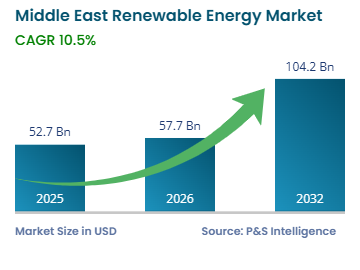
| Market Size in 2025 | USD 52.7 Billion |
| Market Size in 2026 | USD 57.7 Billion |
| Market Size by 2032 | USD 104.2 Billion |
| Projected CAGR | 10.5% |
| Largest Country | Saudi Arabia |
| Fastest Growing Country | U.A.E. |
| Market Structure | Fragmented |
Market Size
Explore the market potential with our data-driven report
Middle East Renewable Energy Market Future Outlook
The Middle East renewable energy market size for 2025 is estimated at USD 52.7 billion, and it is projected to grow at a CAGR of 10.5% during 2026–2032, to reach USD 104.2 billion by 2032.
The market is experiencing unprecedented growth driven by ambitious national vision programs, declining renewable technology costs, and the region’s strategic shift toward economic diversification away from oil dependency. The abundant solar resources, with the region receiving over 3,000 hours of sunshine annually, and increasing government commitments to net-zero targets are fundamentally transforming the energy landscape across Middle Eastern countries.
The region’s renewable energy transformation is being accelerated by massive investments in solar and wind projects, with countries like Saudi Arabia and the UAE leading the charge through multi-billion-dollar initiatives. According to the Middle East Solar Industry Association, in 2023, the MENA region expanded its solar capacity by 23% compared to the previous year, with Turkey, the UAE, Israel, Egypt, and Saudi Arabia contributing significantly to the overall installed capacity in the region.
This rapid expansion is supported by favorable regulatory frameworks, power purchase agreement mechanisms, and the establishment of dedicated renewable energy authorities across multiple countries. The market is also benefiting from the region’s strategic location between Europe, Asia, and Africa, positioning it as a potential hub for green hydrogen production and export.
The technological maturity of solar photovoltaic systems, combined with some of the world’s lowest levelized costs of electricity from solar projects, is making renewable energy increasingly competitive with conventional power generation. Saudi Arabia’s NEOM project and the UAE’s Energy Strategy 2050, targeting 50% clean energy by 2050, exemplify the transformative ambitions driving market growth. These initiatives are attracting international developers, technology providers, and financial institutions, creating a dynamic ecosystem that is rapidly advancing the region’s renewable energy capabilities.
Middle East Renewable Energy Market Trends & Drivers
Declining Renewable Technology Costs Are Major Trends
The dramatic reduction in renewable energy technology costs represents a fundamental driver reshaping the Middle East’s energy landscape. Solar PV module prices have decreased by over 90% since 2010, making solar energy cost-competitive with fossil fuels even without subsidies in many Middle Eastern markets. The region has achieved some of the world’s lowest tariffs for solar power, with recent projects in Saudi Arabia and the UAE securing power purchase agreements below USD 0.02 per kWh. This cost competitiveness is transforming renewable energy from a sustainability initiative into an economic imperative. The levelized cost of electricity from utility-scale solar projects in the region has fallen below USD 0.03 per kWh in multiple markets, making it cheaper than new gas-fired power plants.
Wind energy costs have similarly declined, with onshore wind projects achieving tariffs below USD 0.04 per kWh in countries like Saudi Arabia and Jordan. These cost reductions are being driven by technological improvements, increased manufacturing scale, enhanced project financing mechanisms, and growing developer experience in the region. The establishment of local manufacturing capabilities, particularly for solar panels and wind turbine components, is further reducing costs while creating industrial diversification opportunities.
Economic Diversification Strategies Drive Renewable Energy Investments
The Middle East’s renewable energy market is being fundamentally transformed by comprehensive national vision programs aimed at economic diversification and sustainable development. Saudi Arabia’s Vision 2030 targets 130 GW of renewable energy capacity by 2030, representing one of the world’s most ambitious renewable energy programs. The UAE’s Energy Strategy 2050 aims to increase the contribution of clean energy to 50% of the total energy mix, while investing USD 163 billion in renewable energy projects.
These vision programs are creating comprehensive ecosystems supporting renewable energy development through regulatory reforms, financial incentives, and institutional capacity building. Countries are establishing dedicated renewable energy authorities, implementing feed-in tariffs and net metering schemes, and developing green financing frameworks. The programs are also driving localization requirements, mandating minimum levels of local content in renewable energy projects, thereby stimulating domestic manufacturing and service capabilities. Qatar’s National Vision 2030 targets 20% renewable energy by 2030, while Oman’s National Energy Strategy aims for 30% renewable energy by 2030. These coordinated national strategies are creating predictable investment environments, attracting international developers and technology providers while fostering regional cooperation in renewable energy development.
Growing Demand for Green Hydrogen Creates New Market Opportunities
The emergence of green hydrogen as a strategic export commodity is opening unprecedented opportunities in the Middle East renewable energy market. The region’s combination of abundant renewable resources, existing energy infrastructure, and strategic location positions it as a potential global leader in green hydrogen production. Saudi Arabia’s NEOM Green Hydrogen Project, valued at USD 8.4 billion, will produce 600 tons of green hydrogen daily by 2026, making it one of the world’s largest green hydrogen facilities. The UAE has announced plans to capture 25% of the global hydrogen market by 2030, leveraging its renewable energy capacity for electrolysis-based hydrogen production.
This hydrogen economy development is driving massive investments in renewable energy infrastructure, with dedicated solar and wind projects being developed specifically for hydrogen production. Oman is developing multiple green hydrogen projects with a combined investment of over USD 30 billion, targeting production of 1 million tons of green hydrogen annually by 2030. The integration of hydrogen production with renewable energy projects is improving project economics through better capacity utilization and revenue diversification, while creating new value chains in ammonia production, steel manufacturing, and synthetic fuels.
Middle East Renewable Energy Market Segmentation Analysis
Type Analysis
The solar energy category holds the largest share in the Middle East renewable energy market in 2025, of 40%, and it is expected to maintain its dominance throughout the forecast period. This is primarily attributed to the region’s exceptional solar irradiance levels, averaging 2,000-2,500 kWh/m² annually, which are among the highest globally. The maturity of solar PV technology, combined with dramatic cost reductions and proven project execution capabilities, has made solar energy the preferred renewable technology across the region. Large-scale utility solar projects, such as the Mohammed bin Rashid Al Maktoum Solar Park in Dubai with its planned 5,000 MW capacity and Saudi Arabia’s Sudair Solar Project, which has a capacity of 1,500 MW, demonstrate the scale and ambition of solar deployment in the region.
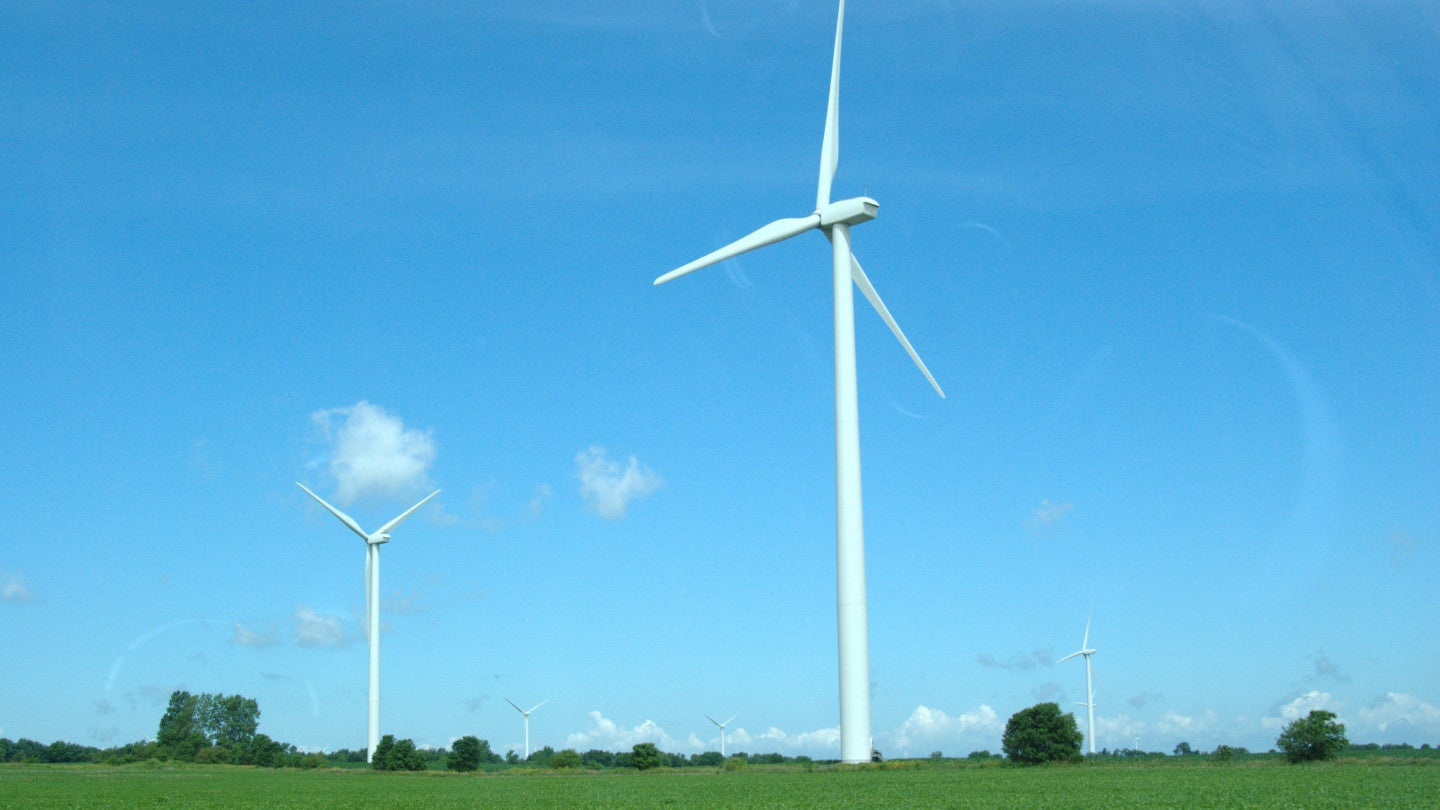
Wind energy is expected to witness the highest CAGR, during the forecast period, driven by improving wind resource assessments, technological advancements in turbine design suited for desert conditions, and growing project development in Saudi Arabia, Jordan, and Oman. The development of the 400 MW Dumat Al Jandal wind project in Saudi Arabia, the region’s largest wind farm, has demonstrated the commercial viability of wind energy in suitable locations. According to the Global Wind Energy Council (GWEC), the Middle East’s wind energy potential exceeds 200 GW. The increasing deployment of hybrid renewable projects combining solar and wind resources is optimizing land use and improving grid stability, while advances in wind turbine technology are enabling projects in lower wind speed areas.
These types are covered:
- Solar Energy (Largest Category)
- Solar PV
- Concentrated Solar Power (CSP)
- Wind Energy (Fastest-Growing Category)
- Onshore Wind
- Offshore Wind
- Hydropower
- Bioenergy
- Geothermal Energy
- Others
Application Analysis
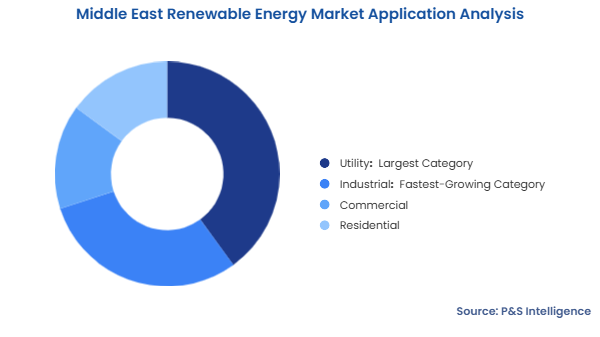
The utility category dominates the Middle East renewable energy market in 2025 with a share of 40%, reflecting the region’s focus on large-scale renewable energy deployment to meet growing electricity demand and diversification targets. Utility-scale projects benefit from economies of scale, government support through long-term power purchase agreements, and integration with national grid infrastructure. The development of renewable energy mega-projects, such as the 2,060 MW Al Dhafra Solar Project in Abu Dhabi and Saudi Arabia’s planned 2,600 MW Makkah Solar Project, demonstrates the scale of utility segment investments. These projects are increasingly incorporating energy storage systems to address intermittency challenges and provide grid services.
The industrial category will have the highest CAGR, during 2026–2032, driven by energy-intensive industries seeking to reduce operational costs and meet sustainability targets. Oil and gas facilities, aluminum smelters, desalination plants, and petrochemical complexes are increasingly adopting renewable energy to power their operations. According to the Middle East Solar Industry Association (MESIA), industrial facilities commissioned 1.8 GW of renewable energy capacity in 2024, primarily through captive power plants and corporate PPAs.
Saudi Aramco’s commitment to achieving net-zero emissions by 2050 and ADNOC’s clean energy targets are driving renewable adoption across the industrial sector. The commercial segment, while currently smaller at 10% market share, is experiencing robust growth driven by green building mandates and corporate sustainability commitments, with shopping malls, hotels, and office buildings increasingly installing rooftop solar systems.
These applications are covered:
- Utility (Largest Category)
- Industrial (Fastest-Growing Category)
- Commercial
- Residential
Drive strategic growth with comprehensive market analysis
Middle East Renewable Energy Market Geographical Analysis
Saudi Arabia Renewable Energy Market Size
Saudi Arabia has the largest share, of 40%, in the Middle East renewable energy market in 2025, driven by the kingdom’s massive renewable energy program under Vision 2030 and its National Renewable Energy Program (NREP). The country’s renewable energy capacity reached 2.8 GW in 2024, with projects under development totaling over 15 GW. The kingdom’s ambitious target of 130 GW renewable capacity by 2030 requires investments exceeding USD 100 billion, creating unprecedented opportunities for developers, technology providers, and service companies. The country awarded contracts for 5,500 MW of renewable energy projects in 2024.
The Saudi renewable energy market is being transformed by the establishment of dedicated institutional frameworks, including the Renewable Energy Project Development Office (REPDO) and the Saudi Green Initiative. The country’s vast land resources, excellent solar and wind conditions, and strong government commitment are attracting leading international developers. The 1,500-MW Sudair Solar PV project, developed by ACWA Power and Badeel, and the planned 700-MW Ar Rass Solar Project demonstrate the scale of renewable deployment. The kingdom is also emerging as a regional manufacturing hub, with plans to establish solar panel and wind turbine manufacturing facilities to support local content requirements of 40% by 2030.
UAE Renewable Energy Market Outlook
The UAE is expected to be the fastest-growing country market in the Middle East, with a CAGR of approx. 11.0% during 2026–2032, driven by aggressive renewable energy targets, world-class project execution capabilities, and strategic positioning as a global clean energy hub. The country’s installed renewable energy capacity exceeded 5.5 GW in 2024, with the Mohammed bin Rashid Al Maktoum Solar Park serving as a flagship project showcasing various solar technologies, including the world’s tallest CSP tower at 262 meters. The UAE’s commitment to achieving net-zero emissions by 2050, the first Middle Eastern country to make such a pledge, is accelerating renewable energy deployment across all seven emirates.
Abu Dhabi’s recent announcement of 5.5 GW of new solar projects and Dubai’s plan to generate 75% of electricity from clean sources by 2050 underscore the emirates’ renewable energy ambitions. The country’s renewable energy success is supported by innovative financing mechanisms, including green bonds and sustainability-linked loans, with the Abu Dhabi National Energy Company (TAQA) raising USD 3.5 billion for renewable energy projects in 2024. The UAE’s leadership in hosting COP28 and establishing the USD 30 billion ALTÉRRA climate fund demonstrates its commitment to regional and global renewable energy transition.
These countries are covered:
- Saudi Arabia (Largest Country Market)
- UAE (Fastest-Growing Country Market)
- Qatar
- Kuwait
- Oman
- Bahrain
- Jordan
- Egypt
- Israel
- Others
Middle East Renewable Energy Market Share
The Middle East renewable energy market is largely fragmented, with varying policies, market maturity, and infrastructure across countries. While leaders like Saudi Arabia and the UAE have established large-scale programs, others remain in earlier stages. Numerous international and local developers compete, especially in solar and wind. However, some consolidation is emerging in utility-scale projects, where major players like ACWA Power and Masdar dominate tenders. The commercial and industrial (C&I) solar segment in the UAE is also showing signs of consolidation. Overall, the market remains diverse and competitive, but consolidation is expected to increase as projects scale and regulations mature.
Key Middle East Renewable Energy Companies:
- ACWA POWER Company
- Abu Dhabi Future Energy Company PJSC (Masdar)
- ENGIE SA
- TotalEnergies SE
- Électricité de France SA
- Marubeni Corporation
- JinkoSolar Holding Co. Ltd.
- First Solar Inc.
- Siemens Energy AG
- GE Vernova Inc.
- Huawei Technologies Co. Ltd.
- LONGi Green Energy Technology Co. Ltd.
- Canadian Solar Inc.
- TSK Electr
- Vestas Wind Systems A/S
Middle East Renewable Energy Market News
- In October 2024, ACWA Power Company signed agreements to develop three solar projects in Saudi Arabia with a combined capacity of 5.5 GW, representing investments of USD 4.5 billion and supporting the kingdom’s renewable energy targets.
- In September 2024, Masdar announced plans to invest USD 15 billion in renewable energy projects across Jordan, Egypt, and Iraq by 2030, expanding its regional footprint beyond the Gulf Cooperation Council countries.
- In July 2024, the UAE’s TAQA completed the financial closing for the 2-GW Al Dhafra Solar Project, securing USD 1.5 billion in project financing from a consortium of international and regional banks.
- In June 2024, ACWA Power, the Water and Electricity Holding Company, and Saudi Aramco Power Company signed power purchase agreements with the Saudi Power Procurement Company for the establishment and management of three major new solar PV projects in Saudi Arabia. Totaling of USD 3.3 billion (SAR 12.3 billion) in investment and 5,500 MW in installed capacity, they will become operational in the first half of 2027.
- In May 2024, Saudi Arabia’s Public Investment Fund established a new renewable energy company with USD 10 billion in capital to develop and invest in renewable energy projects domestically and internationally.
- In March 2024, Jordan commissioned the 50 MW Quweira Solar Power Plant, developed by Alcazar Energy, bringing the country’s total solar capacity to over 2,000 MW.
- In January 2024, Oman launched tenders for 2 GW of solar and wind projects as part of its plan to achieve 30% renewable energy by 2030, attracting bids from over 30 international developers.
link